Reading Time: 6 minutes
By: Clinical Equipment Specialist
The “Silent” Pain of a Busy Exam Lane
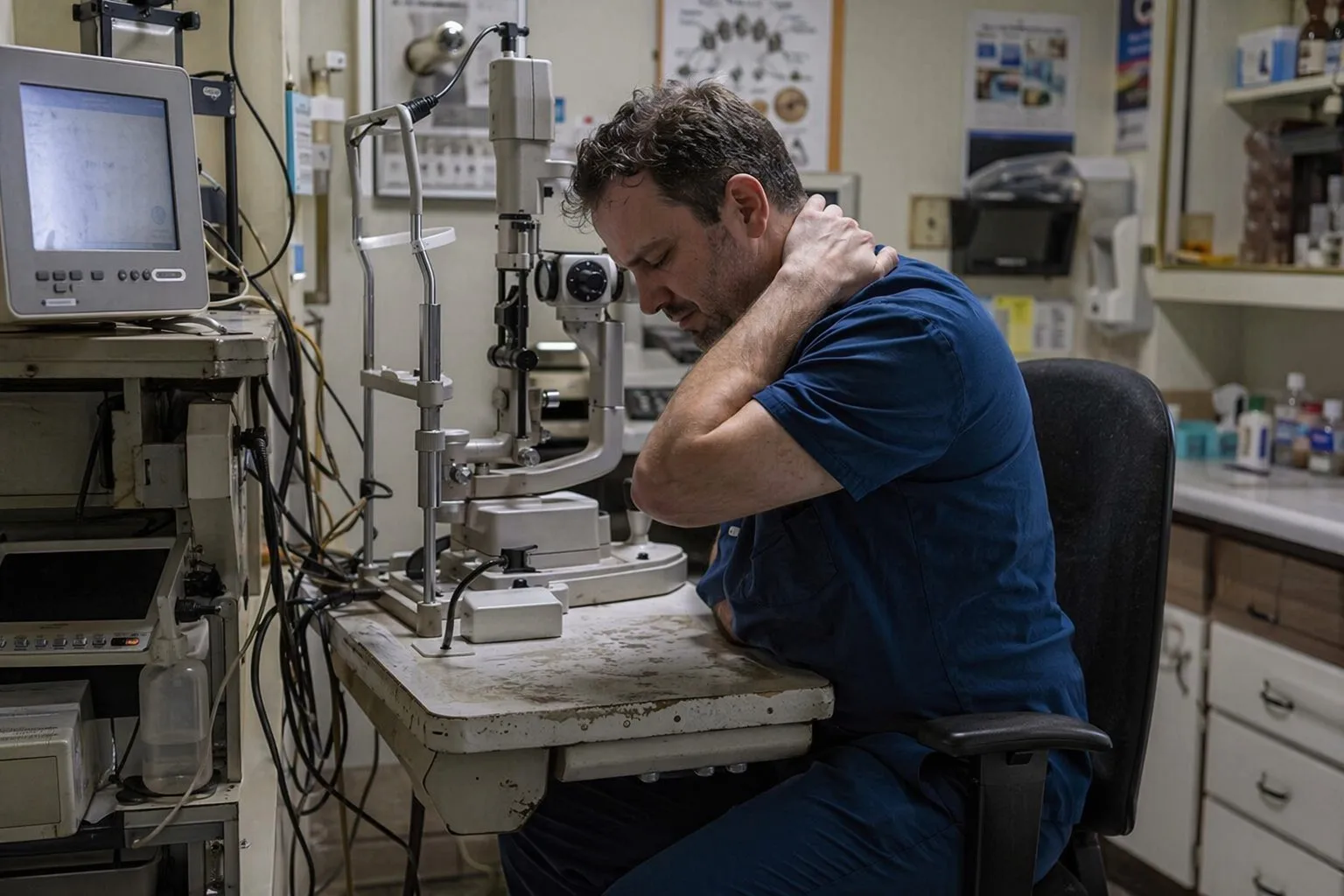
It’s 3:00 PM on a Tuesday. Your waiting room is full, and you’re moving between lanes. You sit down at the slit lamp, adjust your stool, and reach for the table height button. Grind. Whirrr. The slow, noisy ascent not only breaks your concentration but also visibly unsettles your patient. Worse, as you begin the fundus examination, you notice a slight micro-vibration in the tabletop—just enough to make focusing a challenge.
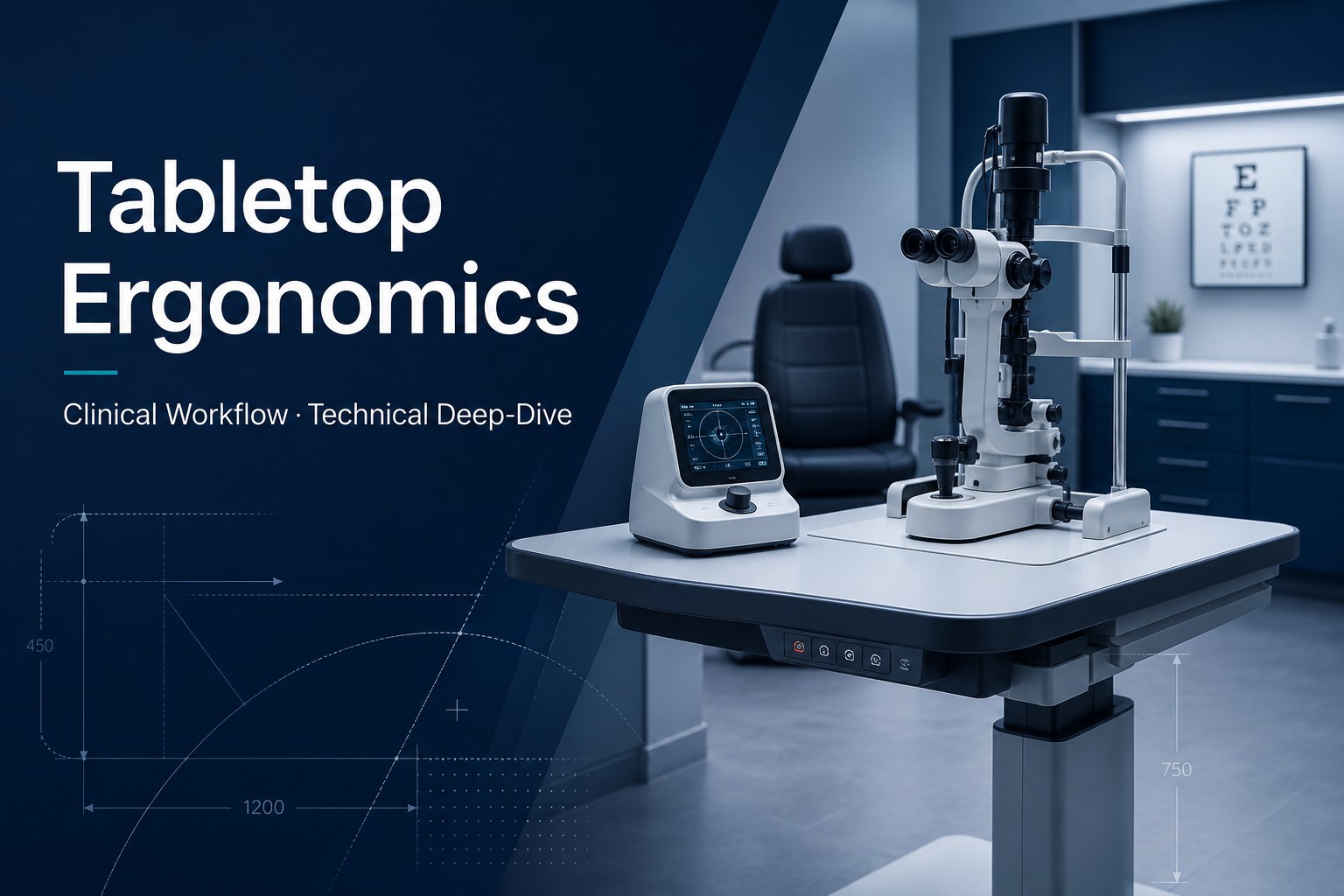
In the world of ophthalmology, we often obsess over the optics of a $20,000 slit lamp or the resolution of a new OCT. But we rarely discuss the foundation upon which they sit. An ophthalmic instrument table isn’t just furniture; it’s a critical component of your diagnostic workflow. In fact, clinical data suggests that poor equipment ergonomics and slow table response can decrease patient throughput by as much as 15% over an 8-hour shift.
As we look toward 2026, choosing the right table requires more than just checking a weight capacity box. Here is the professional guide to making the right investment for your practice.
4 Critical Factors to Consider Before Buying
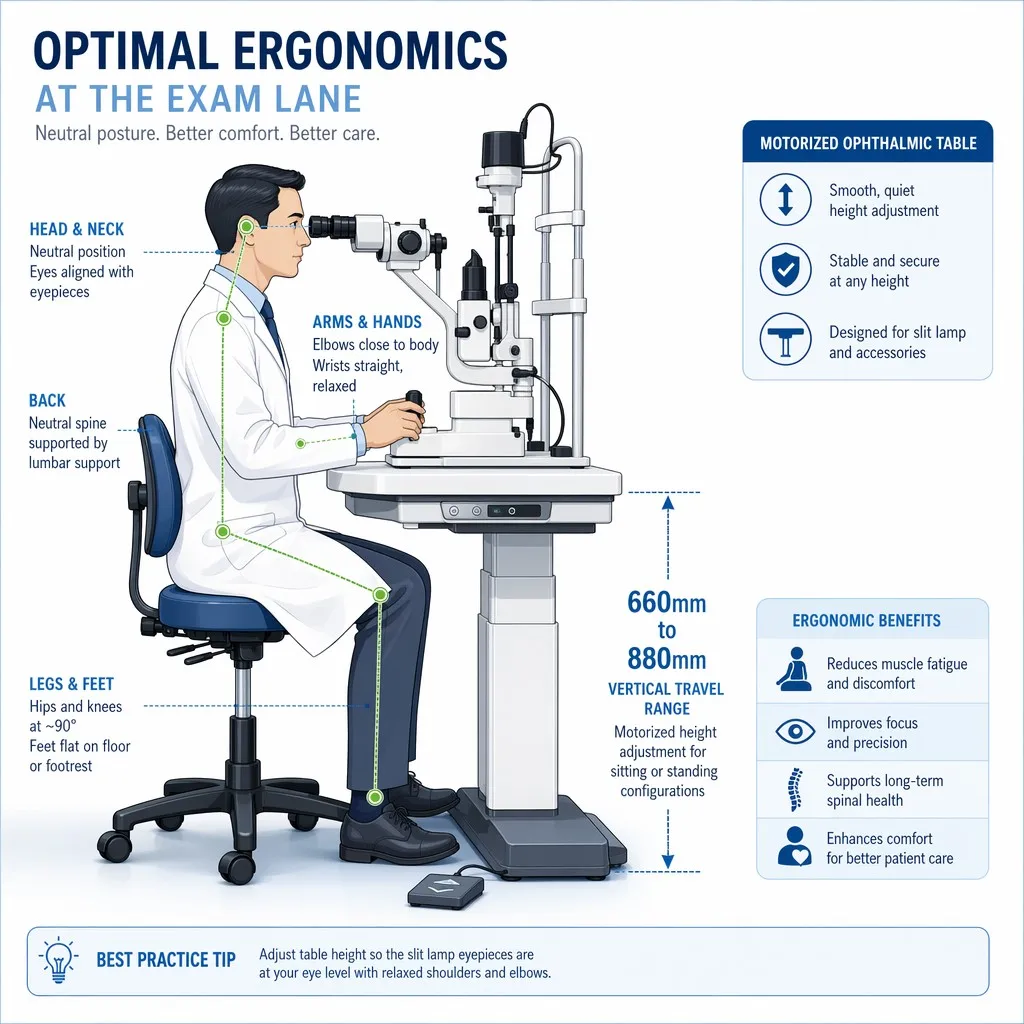
1. Ergonomics & Doctor Comfort: The Range Matters
The most common mistake clinic owners make is choosing a table with a narrow vertical travel range. To accommodate everything from a 5th-percentile female doctor to a 95th-percentile male doctor, you need a range of at least 200mm.
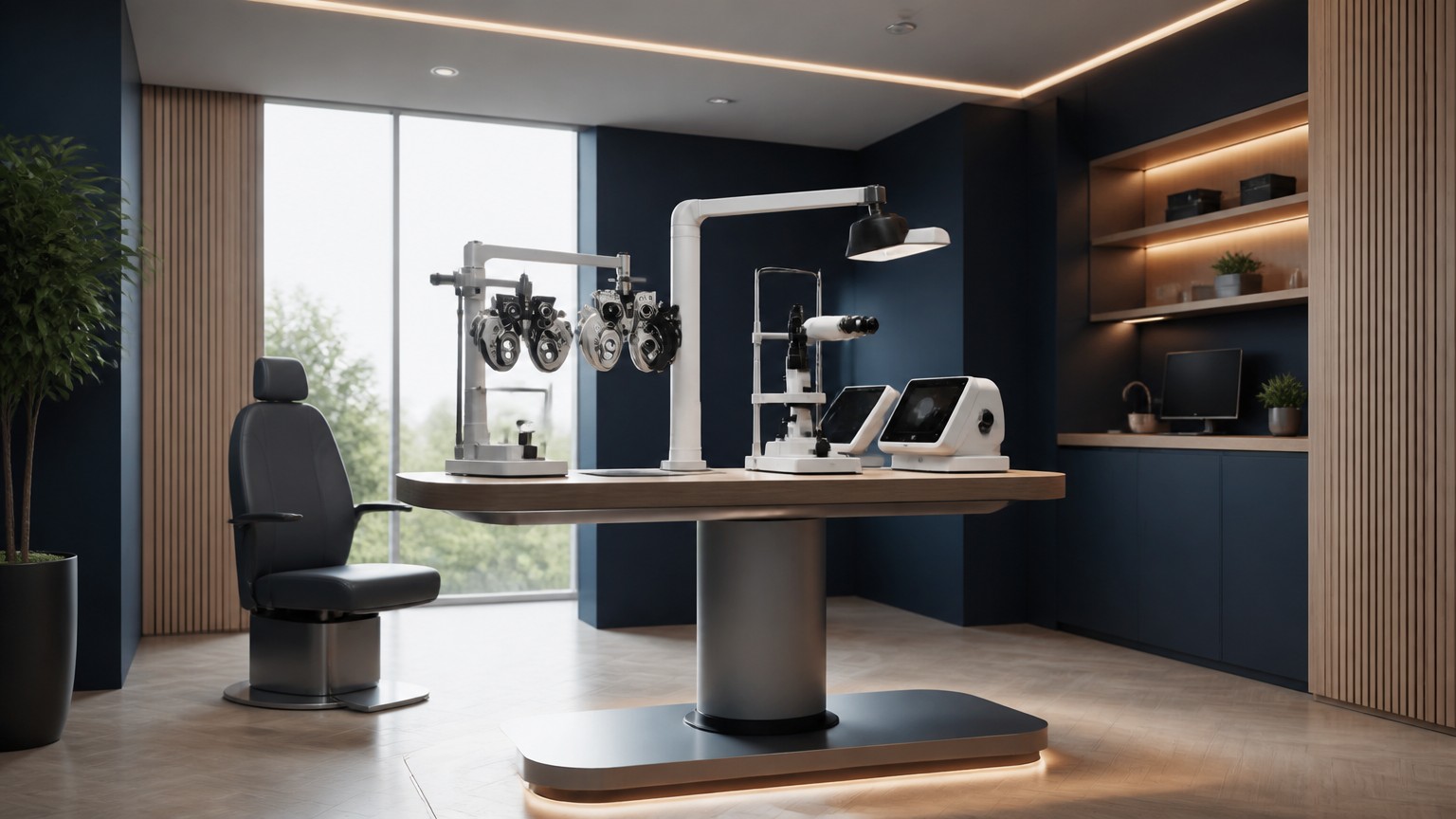
Engineering Insight: Our flagship Jack Pro (AIT-16) series features a travel range of 660mm to 880mm. This ensures that whether you are performing a quick refraction or a delicate YAG laser procedure, your spine remains neutral, preventing the chronic neck pain that plagues 60% of ophthalmologists.
2. Device Compatibility: Beyond Weight
While weight capacity is important (look for at least 50kg-80kg), the distribution and vibration dampening are more vital for high-precision optics.
* Standard Slit Lamps: Require stability and easy-to-clean UV-coated surfaces.
* OCT & Fundus Cameras: These require zero-vibration platforms. A shaky table during a 3D-OCT scan results in motion artifacts, potentially leading to misdiagnosis.
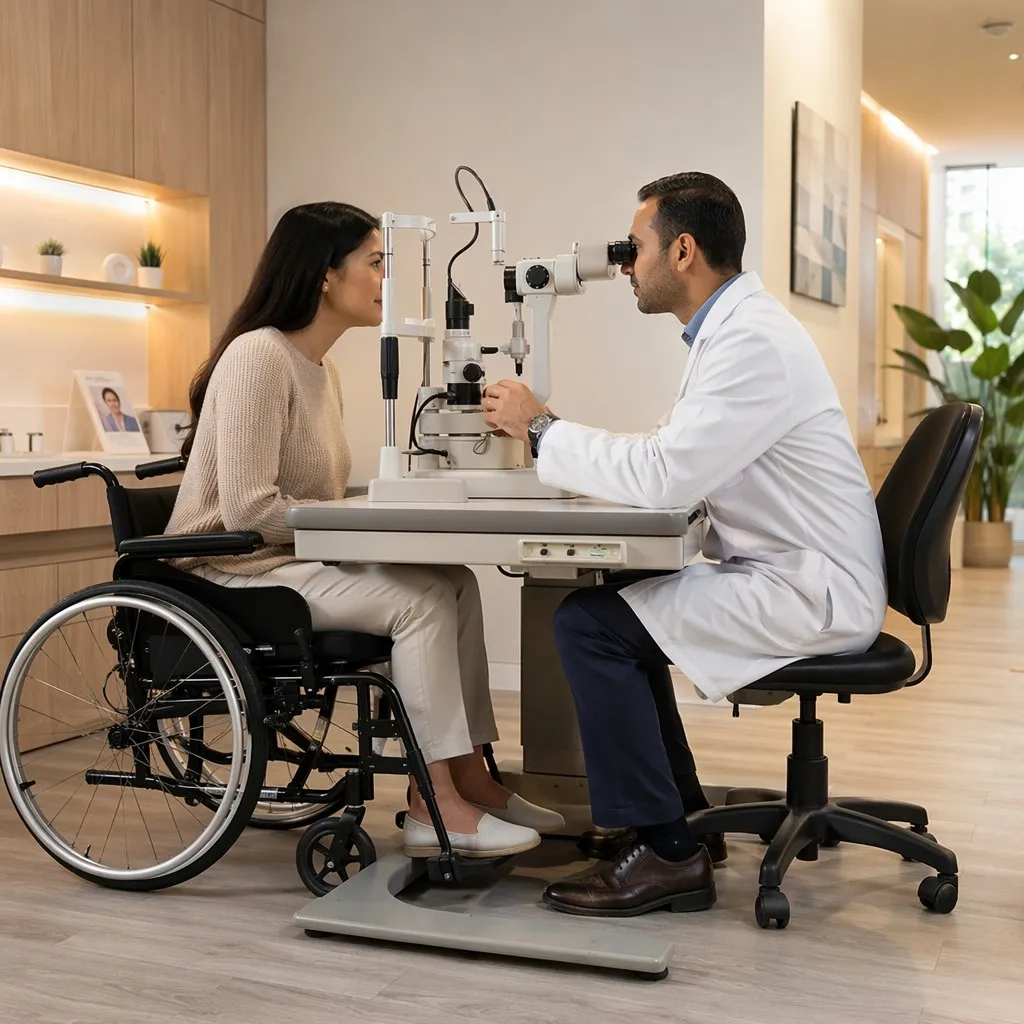
3. Patient Accessibility: The Wheelchair-Friendly Imperative
Global healthcare standards (such as the ADA in the US) are increasingly strict about accessibility. A standard center-column table is often a barrier for patients in wheelchairs.
* Clinical Tip: Look for “Open-Base” designs or offset columns. The WCT-100 Wheelchair Table is designed with a 920mm wide tabletop and an open bottom, allowing the wheelchair to glide directly under the equipment without the patient needing to transfer.
4. Motor Quality & Noise Levels: The “Silent” Standard
In a quiet exam lane, noise is amplified. High-decibel motors create an atmosphere of mechanical industrialism rather than medical care.
* The Gold Standard: Aim for motors that operate below 55dB. At Hongdee, we utilize medical-grade Jiechang or optional Danish Linak motors that provide a smooth, near-silent lift.
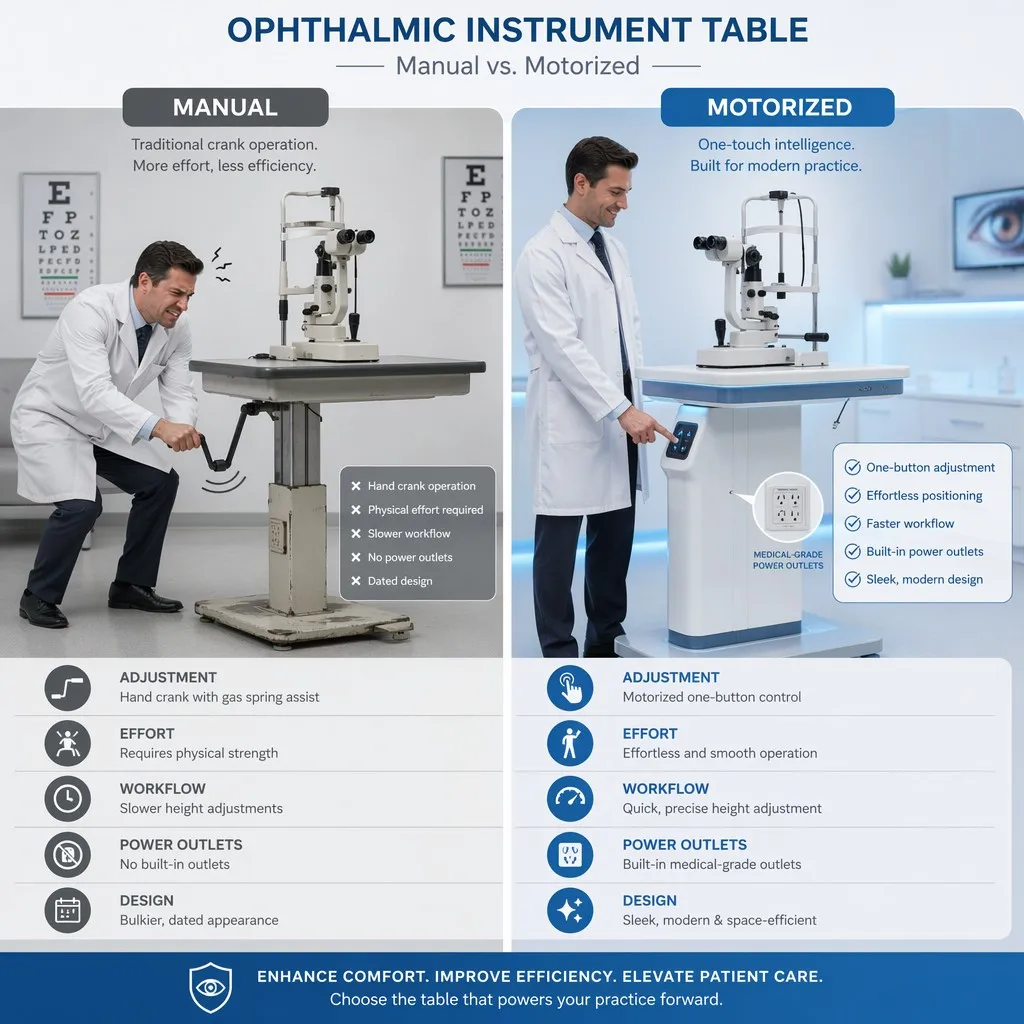
Comparison: Manual vs. Motorized Tables
| Feature | Manual (Crank/Gas) | Motorized (Electric) |
|---|---|---|
| Ease of Use | Requires physical effort | Single-button adjustment |
| Precision | Difficult to fine-tune | Millimeter-perfect positioning |
| Patient Perception | Dated / Budget feel | Modern / Professional |
| Integrated Power | Usually none | 1-4 medical-grade outlets |
| Durability | High (few moving parts) | Very High (sealed medical motors) |
| Recommendation | Ideal for mobile/charity camps | Essential for modern clinics |
Clinical Pearls: Expert Tips for Setup
Based on 15 years of equipping Topcon and Zeiss exam lanes, here are our top “Pearls” for your new setup:
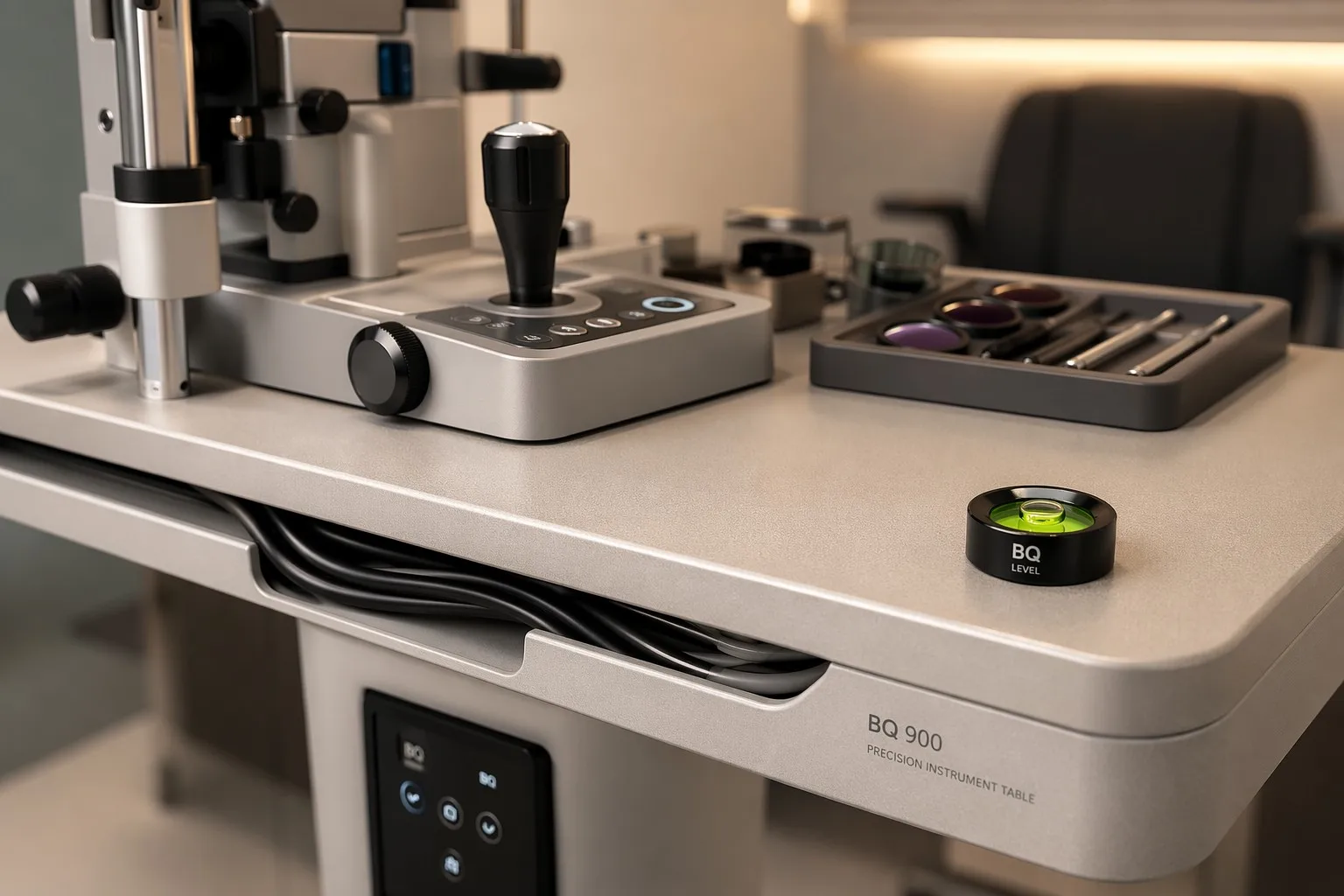
- The Leveling Rule: Even on a “flat” floor, always use a bubble level on the tabletop. A 1-degree tilt can cause heavy OCT heads to “drift” during adjustment.
- Power Surge Protection: Your table is a power hub. Ensure your table has a built-in fuse system (the Jack Pro uses a 4-fuse safety matrix) to protect the expensive devices plugged into it.
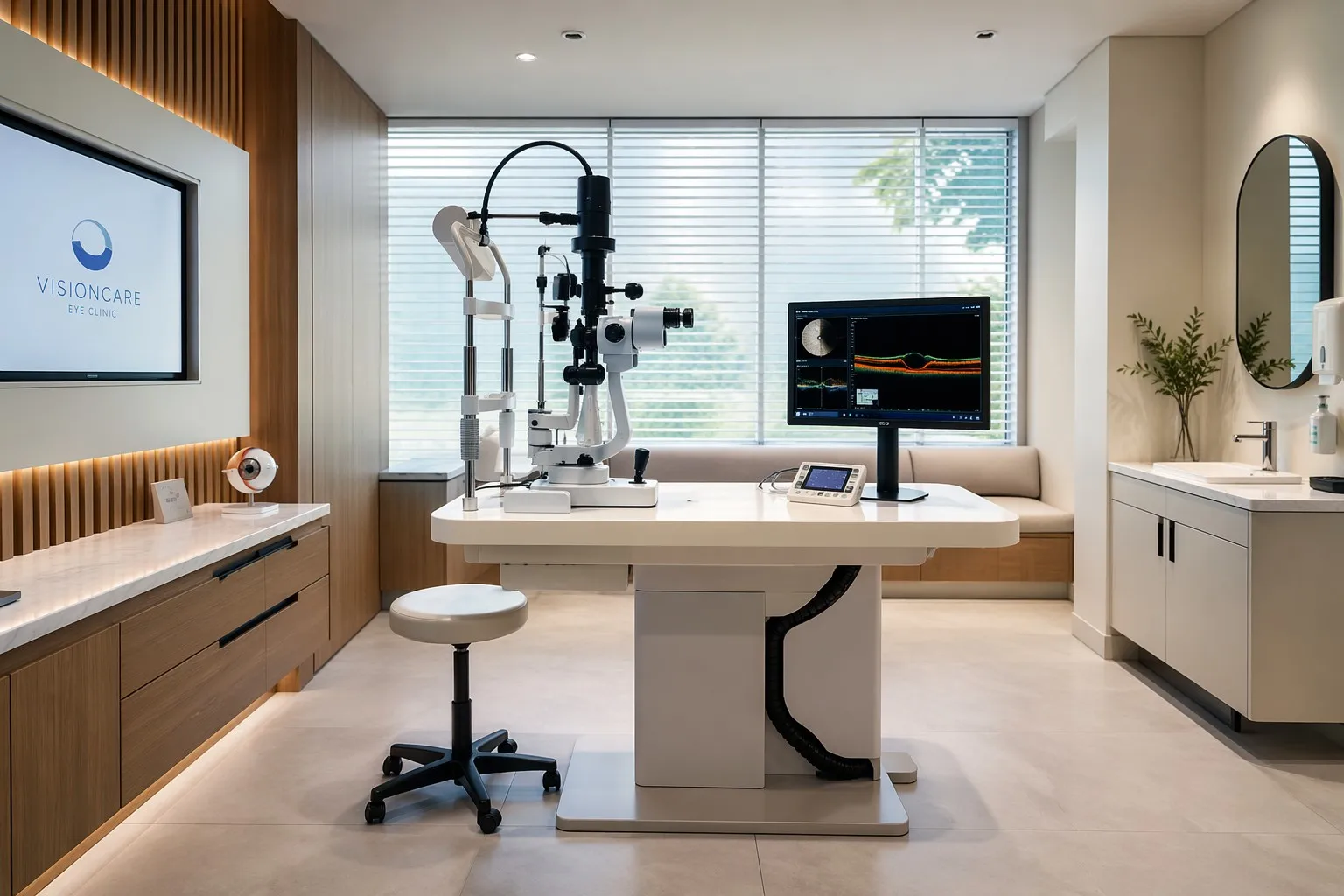
- Cable Management: Use the hidden cable channels provided in high-end tables. Loose cables are not just an eyesore; they are a significant trip hazard for elderly patients.
- Foot Pedal Option: If your hands are always busy with the slit lamp joystick, request a foot pedal control. It’s a game-changer for clinic flow.
Ready to Upgrade Your Exam Lane?
Choosing the right foundation is the first step toward clinical excellence. Whether you need the precision of the Jack Pro for your flagship lane or the accessibility of the WCT Series, Hongdee provides the engineering that world-leading OEMs trust.
- Explore the Jack Pro Series →
- Download the 2026 Product Catalog (PDF) →
- Request a Quote for Your Clinic →
Hongdee: Engineering Precision for the World’s Leading Ophthalmologists.