Reading Time: 6 minutes
By: Clinical Strategy & Innovation Lab
Forecasting the Future: Insights from ESCRS 2026
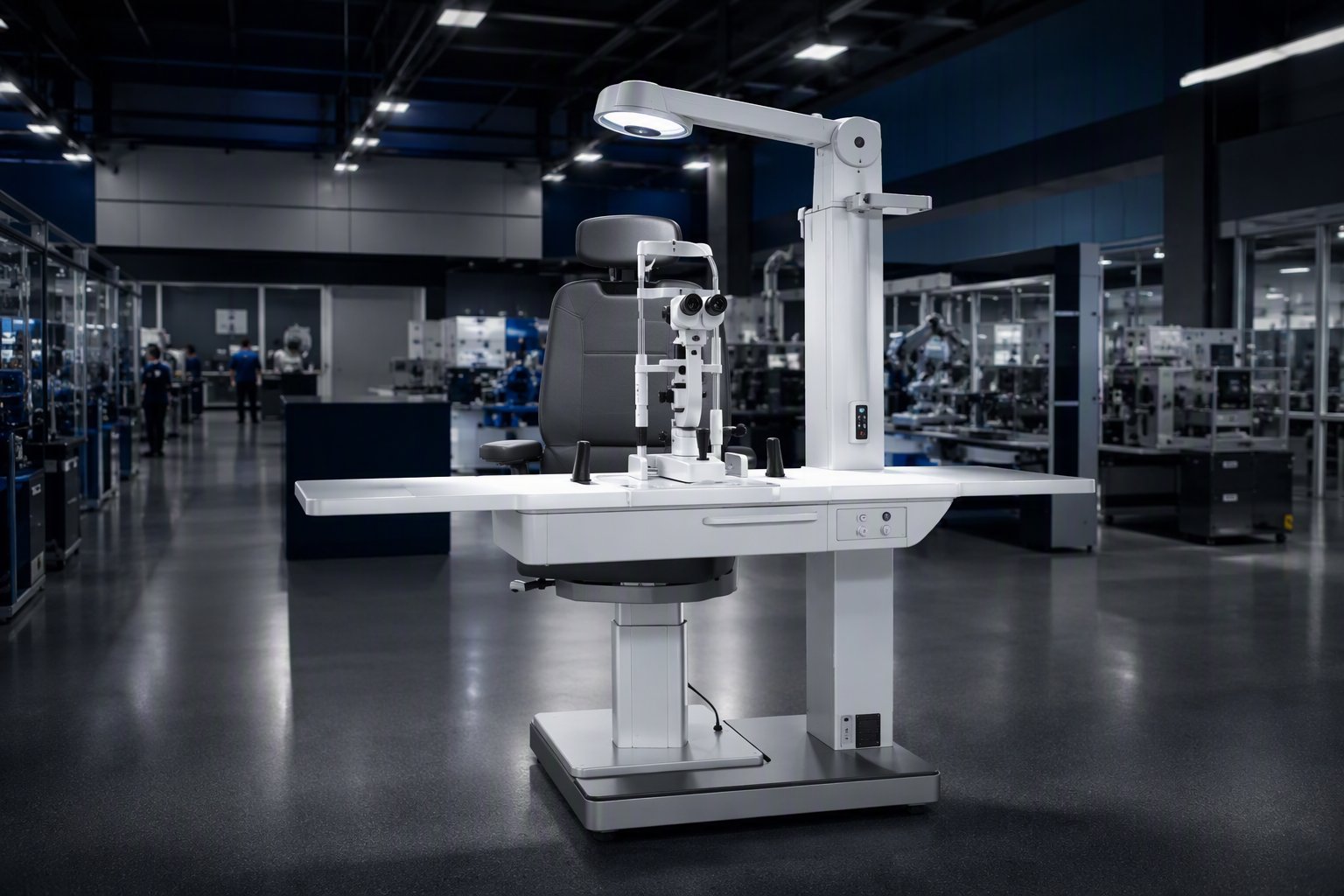
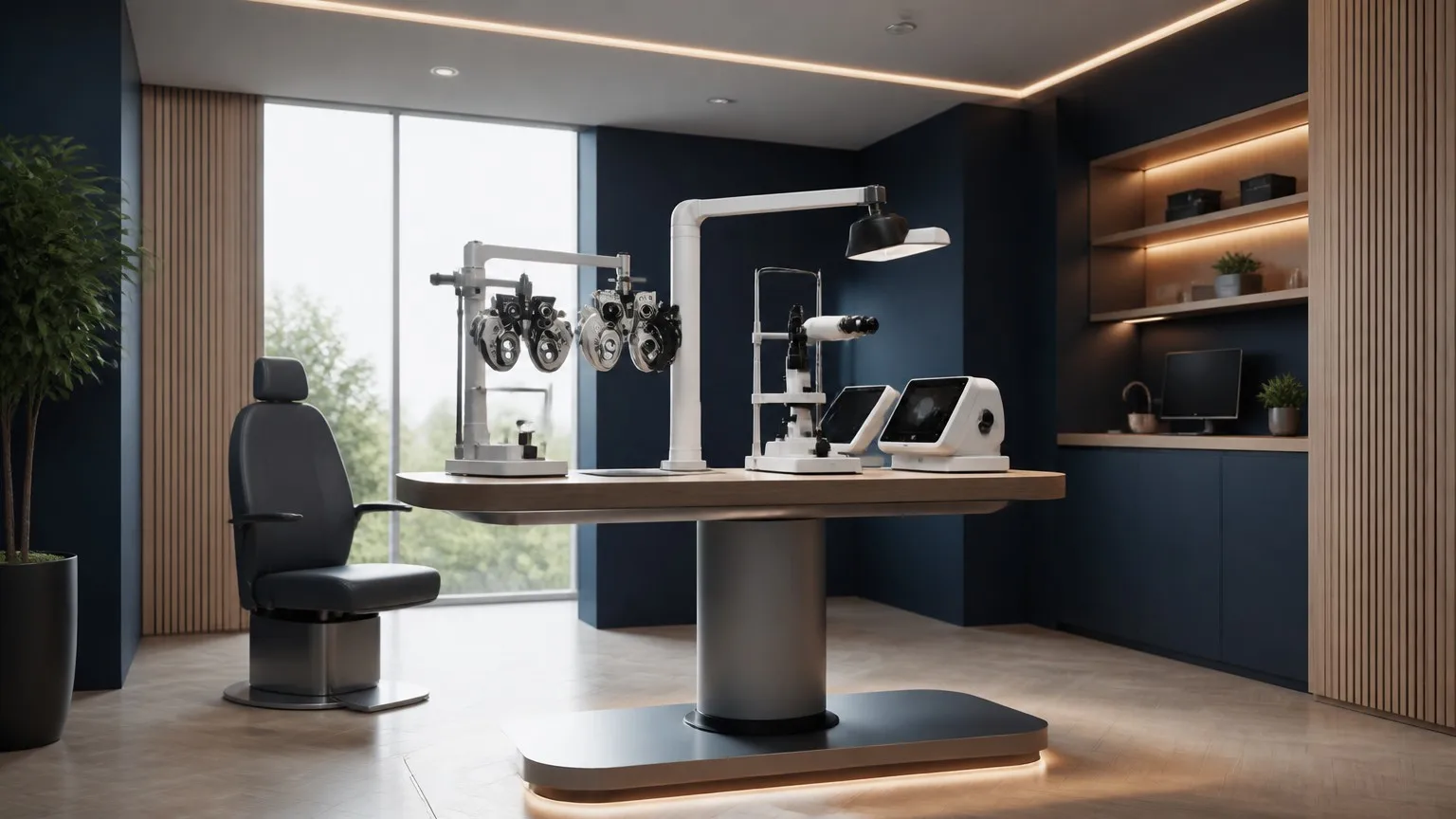
Following the intensive discussions at ESCRS 2026, the consensus among industry leaders is clear: the ophthalmic exam lane is undergoing its most significant transformation in a decade. We are moving away from static, standalone pieces of furniture toward an Integrated Diagnostic Ecosystem.
As we look toward 2027, the design of your clinic won’t just be about “buying gear”; it will be about optimizing the interface between human, machine, and data. Here are the four key trends that will define the next generation of eye care.
Trend 1: Modular Healthcare Design & The “Fluid” Clinic
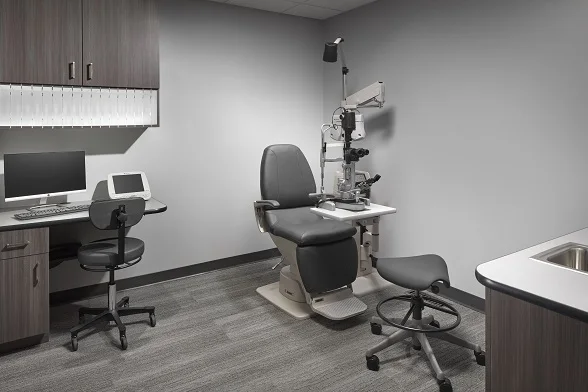
The era of the heavy, fixed-position refraction unit is fading. Modern clinic management ROI is now driven by flexibility and Modular Healthcare Design.
- Mobile Workstations: Expect to see a rise in heavy-duty instrument tables equipped with medical-grade locking casters and long-range internal battery backups.
- The Benefit: This allows a clinic to reconfigure their diagnostic lanes in minutes, adapting to fluctuating patient volumes or new diagnostic protocols without a contractor or a plumber.
Trend 2: Integrated Digital Ecosystems (IoT Tables)
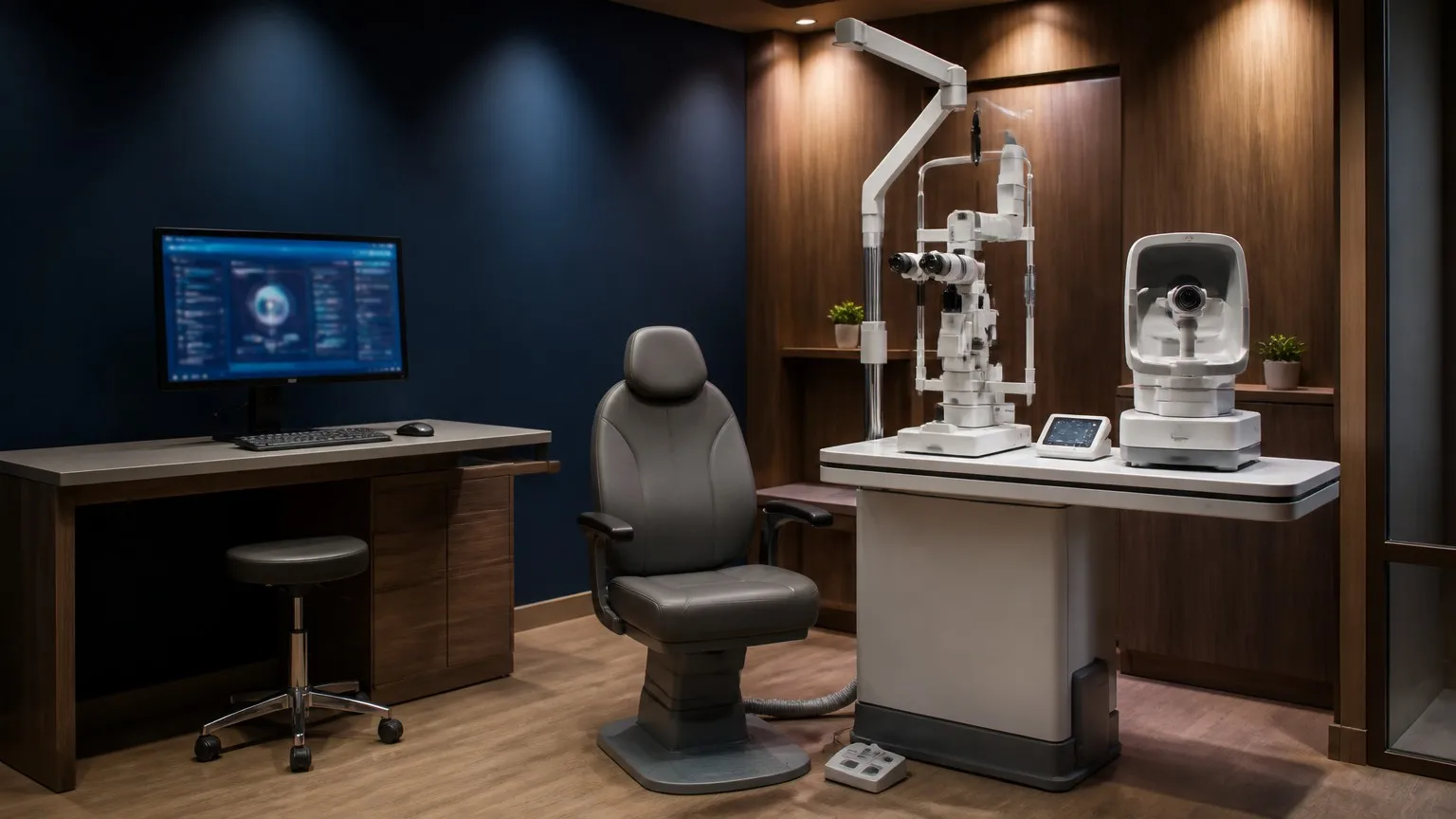
In 2027, the ophthalmic table will no longer be a passive support tool. It is becoming the “Hub” of the exam lane.
- The Smart Core: Future tables will feature integrated data hubs. Imagine a table where the HDMI, Ethernet, and Power for your Slit Lamp and OCT are pre-routed through the central column, connecting directly to your EMR via a single fiber-optic link at the base.
- The Goal: To eliminate the “cable forest” that currently occupies 20% of the lane’s footprint, improving both aesthetics and safety.
Trend 3: Patient-Centric Inclusion (The Rise of Universal Design)
Global aging populations are forcing a shift from “Specialized Disability Design” to Universal Design. In 2027, being “Wheelchair Friendly” won’t be a special category—it will be the baseline.
- Standardized Knee Clearance: We predict that the Knee Clearance Height standards (like ADA M301) will become the default specification for all tables, not just specialty models.
- Hongdee’s Lead: This is why we are already standardizing side-column architectures across our mid-range products, ensuring every doctor is ready for an inclusive future.
Trend 4: Sustainable Ophthalmic Practice & Anti-Microbial Manufacturing
The “Green Clinic” is no longer a niche concept. As B2B procurement policies tighten, sustainability is becoming a deal-breaker, directly aligning with the Sustainable Ophthalmic Practice standards (influenced by the EyeSustain initiative).
- Eco-Friendly Coatings: Look for manufacturers moving away from high-VOC solvent paints toward UV-Cured Powder Coatings and sustainable wood-fiber composites.
- Passive Disinfection: We are seeing increased demand for tabletop materials with integrated silver-ion or anti-microbial properties that actively reduce the viral load in the exam lane between cleanings.
Expert Insights: Preparing Your Practice Management ROI
- Future-Proof Your Power: When buying today, ensure your tables have extra internal wiring capacity. You don’t want to replace your furniture just because you added a new high-bandwidth imaging head.
- Invest in Height: The average height of patients (and doctors) is increasing globally. Ensure your tables have a travel range of at least 220mm-250mm to remain relevant for the next 10 years.
- Think “Lean”: Every square centimeter of floor space in a clinic costs money. Choose tables with a high Stability-to-Footprint ratio.
Hongdee: Engineering Tomorrow’s Vision, Today.