Reading Time: 5 minutes
By: Clinical Workflow Consultant
Why “Bigger” Isn’t Always Better in an Exam Lane
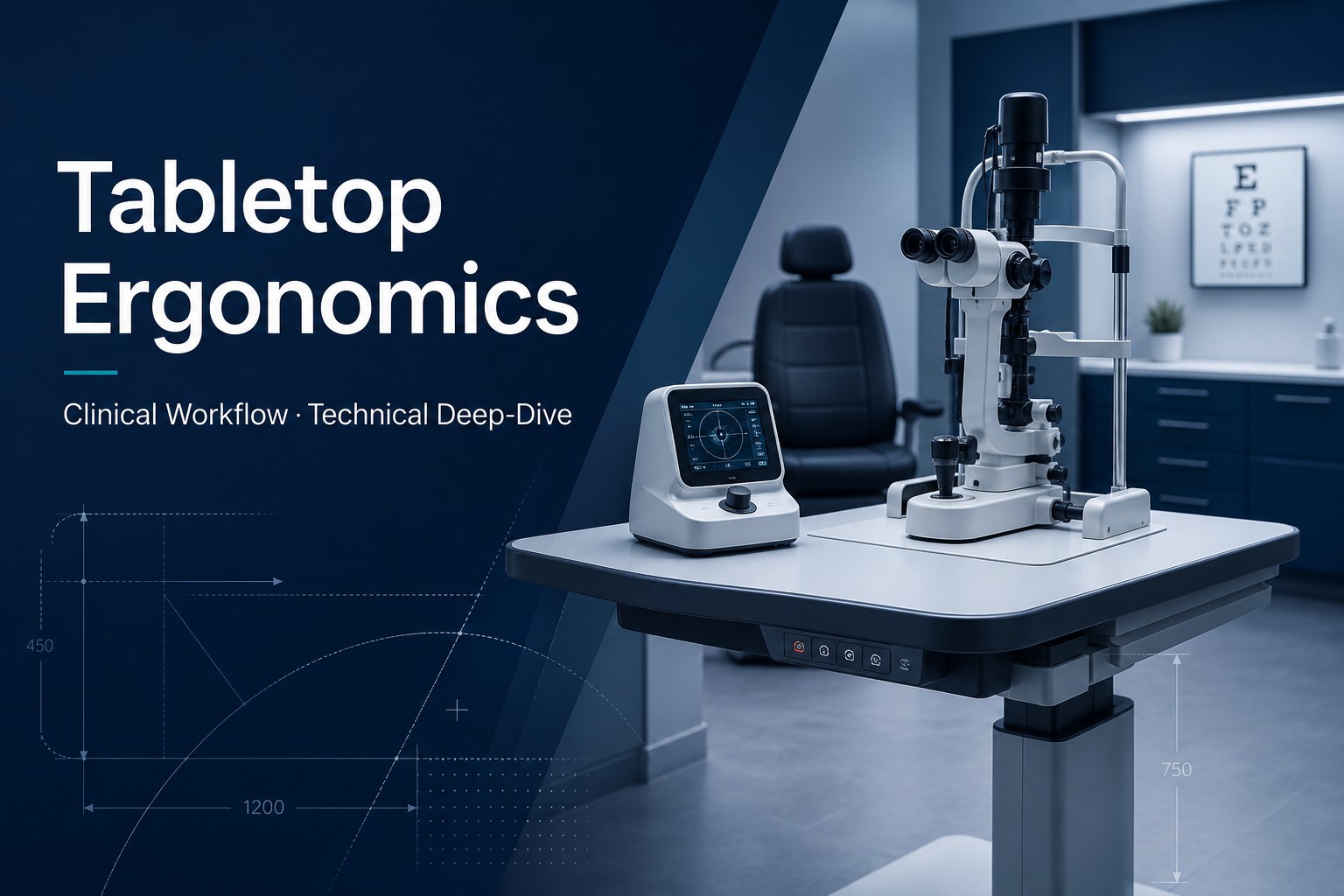
When selecting an ophthalmic table, many clinic managers default to the largest tabletop available. The logic seems sound: More space for more stuff. But in the precise, high-volume world of ophthalmology, an oversized table can be as detrimental to your workflow as one that’s too small.
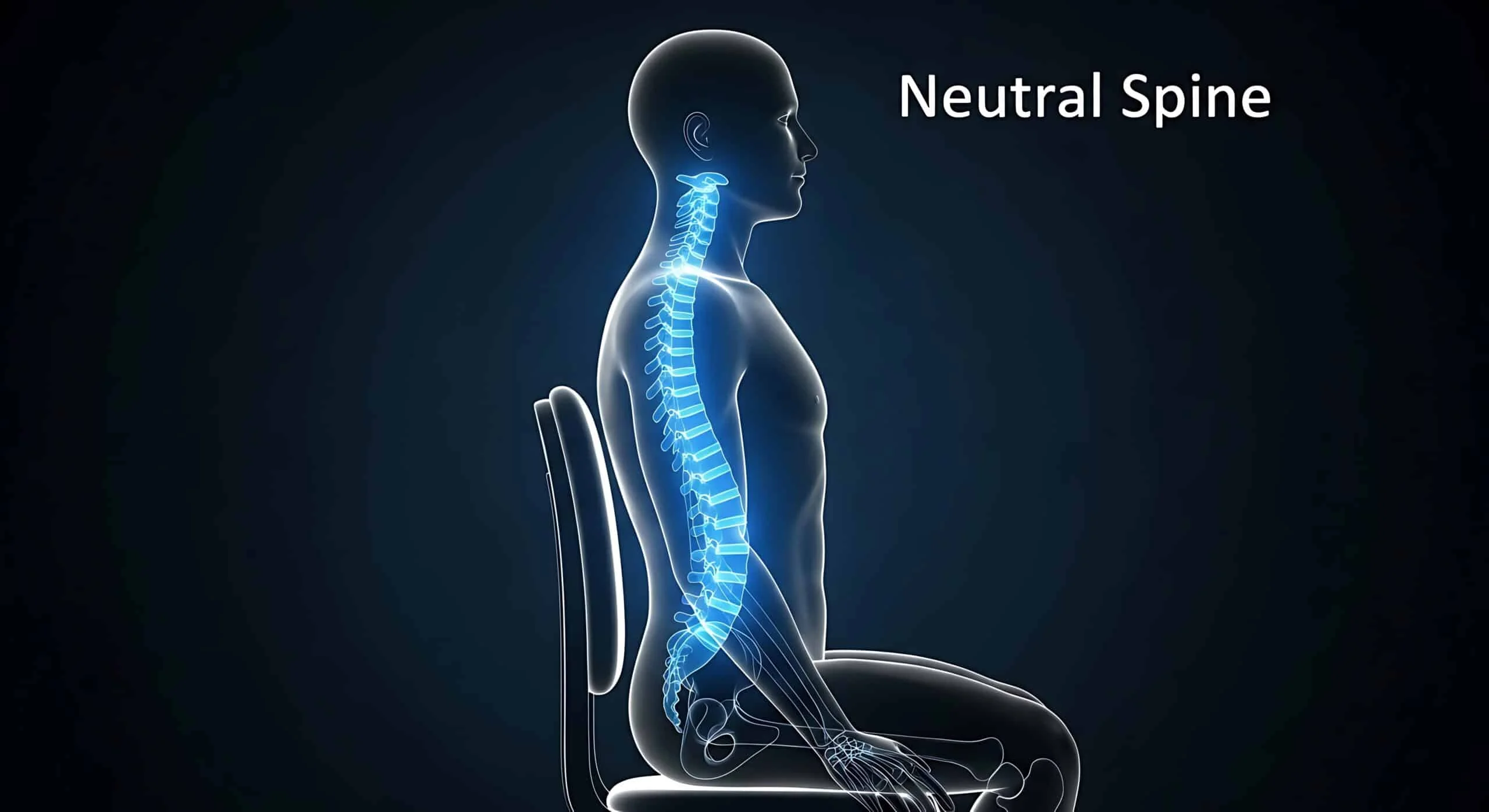
The size of your tabletop directly dictates the Doctor’s Operational Radius. If the table is too wide, the doctor must repeatedly reach forward or lean awkwardly to adjust the slit lamp or interact with the patient. Over a 40-patient day, these “micro-strains” accumulate into chronic shoulder and neck fatigue. In fact, following AAO Ergonomics Guidelines and maintaining Neutral Spine Positioning is essential to preventing Musculoskeletal Disorders (MSDs) in ophthalmology.
The “Golden Rectangle” of Examination
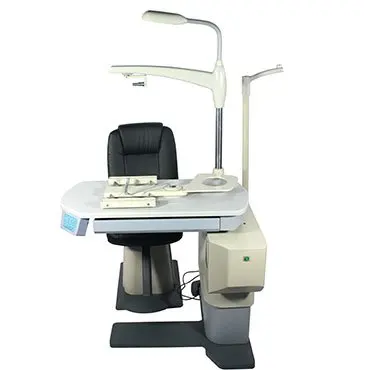
In clinical ergonomics, there is a “Golden Rectangle”—the area where the doctor’s hands can move naturally without overextending.
- The Primary Zone (Slit Lamp): This is the immediate 30cm area where the joystick and patient chin rest sit.
- The Secondary Zone (Tools/Notes): The 10-15cm perimeter where you keep your 20D lens, occluders, or a tablet.
Engineering Insight: Our flagship Jack Pro Series offers two primary sizes: 490x510mm and 480x810mm. The 490x510mm “Standard” size is specifically engineered to keep everything within the Golden Rectangle, minimizing arm reach and reducing the “Long-Lever” effect on the doctor’s rotator cuff.
Arm Reach and Shoulder Fatigue: The Hidden Injury
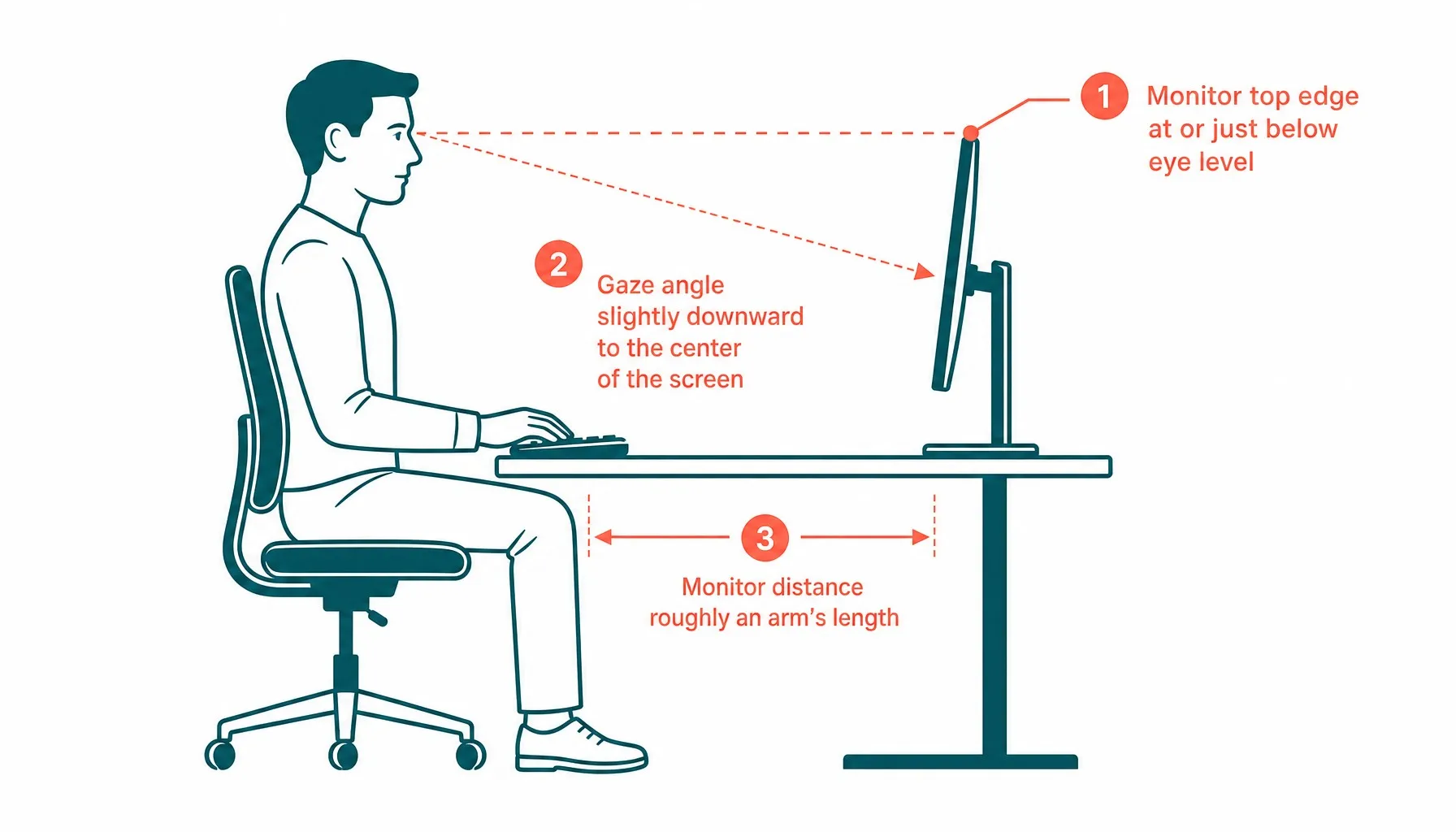
Ophthalmologists have a higher rate of musculoskeletal disorders (MSDs) than many other medical specialties. Much of this is due to “sustained isometric contraction”—holding your arms out to operate a slit lamp for hours.
If a table is unnecessarily deep, the slit lamp sits further away from the doctor’s torso. This forces the elbows away from the body, placing significant stress on the deltoids and cervical spine.
- Clinical Tip: Your elbows should ideally be at a 90-degree angle, close to your ribs. Choosing a table depth like our HD-18 series (450mm depth) allows the doctor to sit closer to the patient, maintaining a neutral posture.
Space Optimization in Small Lanes
As real estate costs rise, “Compact Lanes” are becoming the industry standard. A table that is 10cm too wide can make a small room feel claustrophobic and impede the movement of the doctor and staff.
- The Mobility Factor: A narrower table allows for easier “swivel” of the exam chair and more room for a technician to stand alongside the patient.
- Solution: For tight spaces, we recommend the HD-18AE, which features a compact 400x480mm tabletop without sacrificing the heavy-duty 50kg lift capacity.
Weight Distribution Physics: The Offset Column
Many modern tables use an “Offset” or “Side-Column” design to provide more legroom (especially for wheelchair patients). However, this creates a physics challenge: Cantilever Stress.
When you place a heavy OCT or Slit Lamp on the edge of an offset table, it wants to bend.
- The Hongdee Standard: To solve this, we use high-tensile steel for our support frames and UV-coated, high-density wood-fiber or polymer tops. Our offset models, like the HD-18C, are tested for “Edge-Load Stability,” ensuring that the table remains perfectly level even if your equipment isn’t centered.
Clinical Pearls: Measuring Your Workspace
Before you order, follow these three “Pearls” to ensure a perfect ergonomic fit:
- The Elbow Test: Sit at your current lane. If you can’t touch the patient’s chin rest while your elbows are tucked into your sides, your table is too deep.
- The “Lane Walk”: Map out the patient’s path. Ensure there is at least 60cm of clearance around the table when it is at its highest position.
- The Dual-Device Check: If you plan to put two devices on one table (e.g., a Lensmeter and an Auto-Refractor), use a side-column model like the HD-18B (750x450mm) to maximize horizontal space without increasing the depth that leads to reach-strain.
Hongdee: Ergonomics That Work as Hard as You Do.